

Category Analysis: Maple Syrup
More and more, consumers are seeking straightforward, authentic, flavorful and value-driven products. To attract new shoppers to the maple syrup aisle, brands are demonstrating the versatility of maple syrup through simple yet savory recipes, new usage occasions and packaging that reduces spills and sticky fingers. In their efforts to highlight maple syrup’s practicality and appeal, maple syrup suppliers have noticed that the emerging generation of shoppers prefers to engage through social media and video recipes that showcase maple syrup’s many uses, from a sugar substitute to a quick source of energy.
“Consumers are increasingly interested in simple ingredients, authentic products, and food that delivers both flavor and value,” explained Emma Marvin, Co-CEO of Butternut Mountain Farm. “To reach people who may not already buy maple syrup, we have to show them how useful it is—through approachable recipes, new usage occasions, and packaging that makes maple easy to try and use regularly.”
“The maple consumer is getting younger, and we are engaging more in social media,” observed Arnold Coombs, Executive Director of Sales and Marketing at Coombs Family Farms. “Showing additional uses with video recipes.”
The maple syrup shopper is changing “in the way they use pure maple syrup in their daily life, as an ingredient, as a sugar replacement, or for energy to get you through the day or your workout,” commented Steven Anderson, President, Anderson’s Maple Syrup. “We work to show consumers how versatile a product it is and advertise in places and ways that show this versatility.”
In recent years, maple syrup has been put to use beyond the breakfast table, with consumers increasingly viewing maple syrup as a versatile, clean, and accessible alternative to pure sugar to sweeten their drinks and foods. Brands have been taking the conversation further by enlightening consumers with out-of-the-box recipes and ideas—using maple syrup in BBQ sauces, glazes, dressings and baked goods.
“We are excited to see more people thinking about maple beyond a breakfast topping and recognizing it as the alternative sweetener it is,” Marvin shared. “Maple offers an opportunity to trade up in both flavor and value. When people are going to use a sweetener, they want to feel good about the one they choose, and it does not get much cleaner or simpler than pure maple syrup.”
“Growth is great, but keeping the quality and the connection with the consumer is even more important,” Anderson noted. “So we focus on our quality and try to make that consumer connection stronger.”
More recently, preparing meals at home has become the new norm, and this has provided pantry staples like maple syrup an opportunity to shine. Brands point out that pure maple syrup tends to sell well during economic downturns, due to consumers’ perception that maple syrup is a cost-effective indulgence and comfort food. Maple syrup suppliers are striking while the iron is hot, given that most households often spend more on home-cooked meals and less on dining out when consumers are more economical with their spending.
“We are continuing to offer a range of pack sizes and price points so consumers can find the right value for their needs,” Marvin explained. “While maple may appear to have obvious substitutes, people often choose it for its distinctive flavor and the qualities of the product itself. Once consumers value pure maple syrup, it can be difficult to replace with something that does not offer the same experience. More meals prepared at home also create an opportunity to help consumers see maple as a practical pantry ingredient—not just something they use occasionally on pancakes.”
“Ironically, pure maple syrup sells well in a difficult economy,” Coombs observed. “It’s an affordable luxury. We’ve seen it in a number of economic downturns where our sales actually climb.”
“Pure maple syrup is a comfort food, and we encourage consumers to use it at home and in their everyday life,” Anderson said. “When money is tight in a household, we see them spend a little more on their food preparation at home and a little less going out to eat.”
One focus area for maple syrup brands is positioning maple syrup as a natural, everyday pantry staple that fits the bill for a simple, authentic and clean ingredient. They share a common goal of expanding the overall category by promoting maple syrup as a versatile, all-natural sweetener, no longer limited to just breakfast occasions.
“We want consumers and retailers to see maple as an increasingly natural part of the everyday pantry,” Marvin shared. “It sits at the center of the demand for simple ingredients, authentic products, and natural sweeteners. The opportunity is to make maple more visible, accessible, and relevant across more occasions—not just at breakfast.”
“Most retailers understand that today’s consumer wants a cleaner ingredient panel, a cleaner food,” Coombs explained. “Pure maple with its one ingredient meets the consumer’s demands. Our conversations with retailers aren’t about stealing a slice of market share; it’s about growing the pie and growing the category.”
“We really want to drive home that we are an all-natural alternative for sweeteners,” Anderson shared. “Anderson’s Pure Maple Syrup is not just for breakfast anymore! And Everything Tastes Better with Anderson’s Pure Maple Syrup!”
Suppliers see one of the category’s biggest opportunities in expanding consumer awareness of maple syrup’s versatility across meal occasions, especially as consumers become savvier with cooking, baking and grilling.
“Our biggest challenge is getting consumers to understand all the possible uses for pure maple syrup,” said Coombs. “The syrup category is trending from the artificial pancake and waffle syrup to pure maple syrup. Scan data reinforces this consumer move. I’m excited by the growth opportunities we’re seeing with some grocers allotting more shelf space to pure maple to take advantage of these shifting consumer preferences.”
“The price point of pure maple syrup is rising and we need to try not to out-price our customers,” said Anderson.
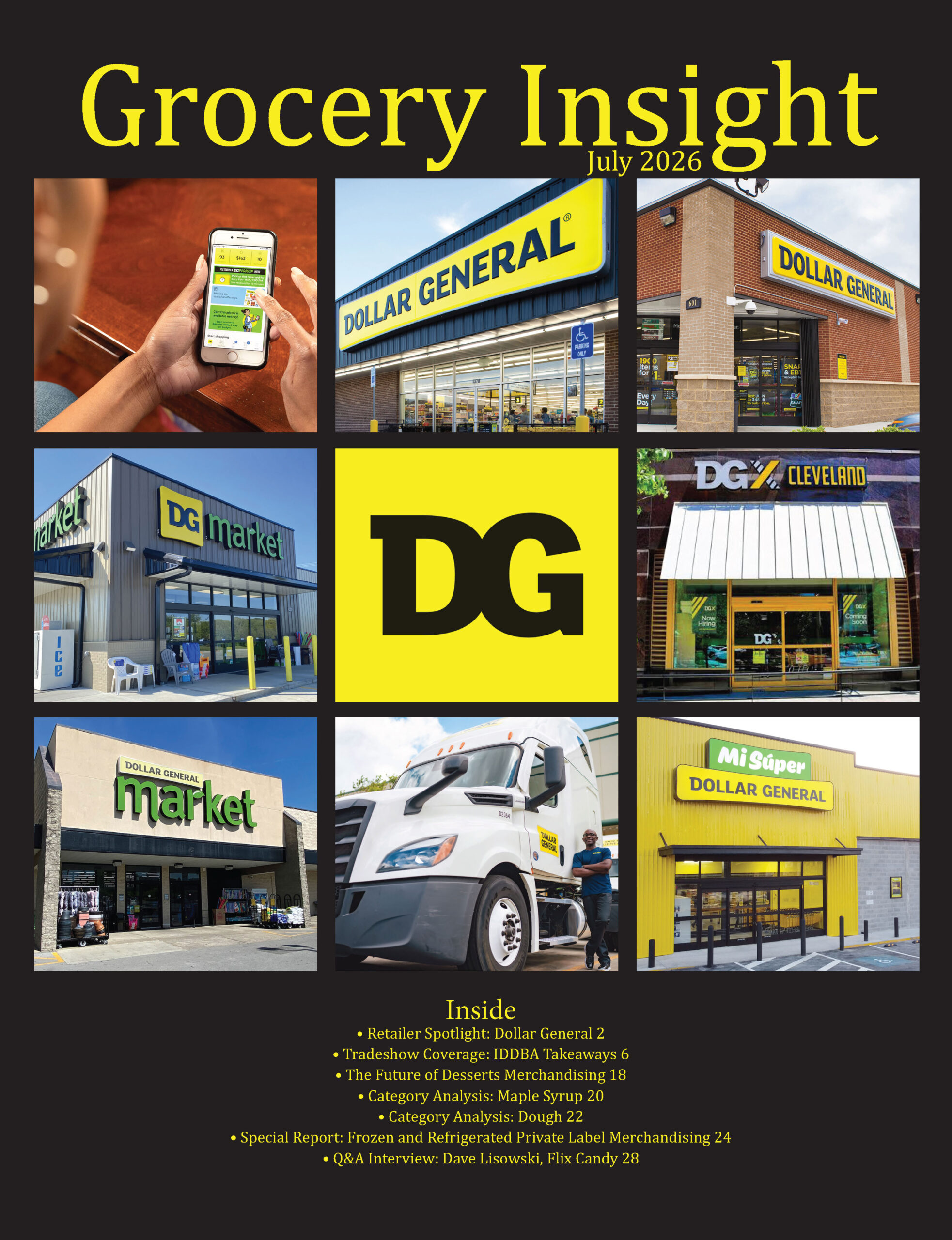
Inside
Retailer Spotlight: Dollar General
Tradeshow Coverage: IDDBA Takeaways
The Future of Desserts Merchandising
Category Analysis: Maple Syrup
Special Report: Frozen and Refrigerated Private Label Merchandising
Q&A Interview: Dave Lisowski, Executive Vice President, Research and Development, Flix Candy