Category Analysis: Packaging Solutions
Budget-conscious customers and regulatory compliance could make 2026 an interesting year for the packaging solutions category. Even with tighter pockets, consumers’ desire has only intensified for recyclable, compostable and bio-based options. But those sustainable claims may soon need verification. The Pack Act in Congress aims to standardize packaging labeling by creating a voluntary, federal framework for claims related to recyclable, compostable and reusable products.
Aluf Plastics knows how trust and transparency go hand in hand in packaging. Bessy Ballesteros, Marketing Manager of Aluf Plastics, reported, “With heightened health consciousness, consumers are paying more attention to ingredient safety, nutrition labels, and regulatory compliance. Packaging that communicates safe food contact while enabling quality and shelf stability appeals to health-minded audiences. Aluf Plastics and EarthFirst are leveraging FDA-approved custom packaging as a trust signal, helping brands clearly communicate food safety, regulatory compliance, and transparency while ensuring product quality and shelf stability.”
For Kurt Richars, Director of Marketing of Anchor Packaging, it’s all about delivering value. He shared, “What we saw in 2025 is that many consumers are moving towards grocery options, such as prepared foods, deli, and grab-and-go. Value is very critical for consumers. And that doesn’t just mean price. It means that their food service delivers quality, accuracy, and convenience.”
He continued, “Operators are dealing with increasing costs too. They need to find ways to save. Packaging solutions like our Crisp Food Technologies with a patented convection crossflow design can help. It can keep their food fresh and help them gain efficiency. They can prep before the lunch rush and know the food will stay high-quality. We help combat rising costs by eliminating labor, waste, and ensuring the customer walks away and has a great experience, so they want to come back.”
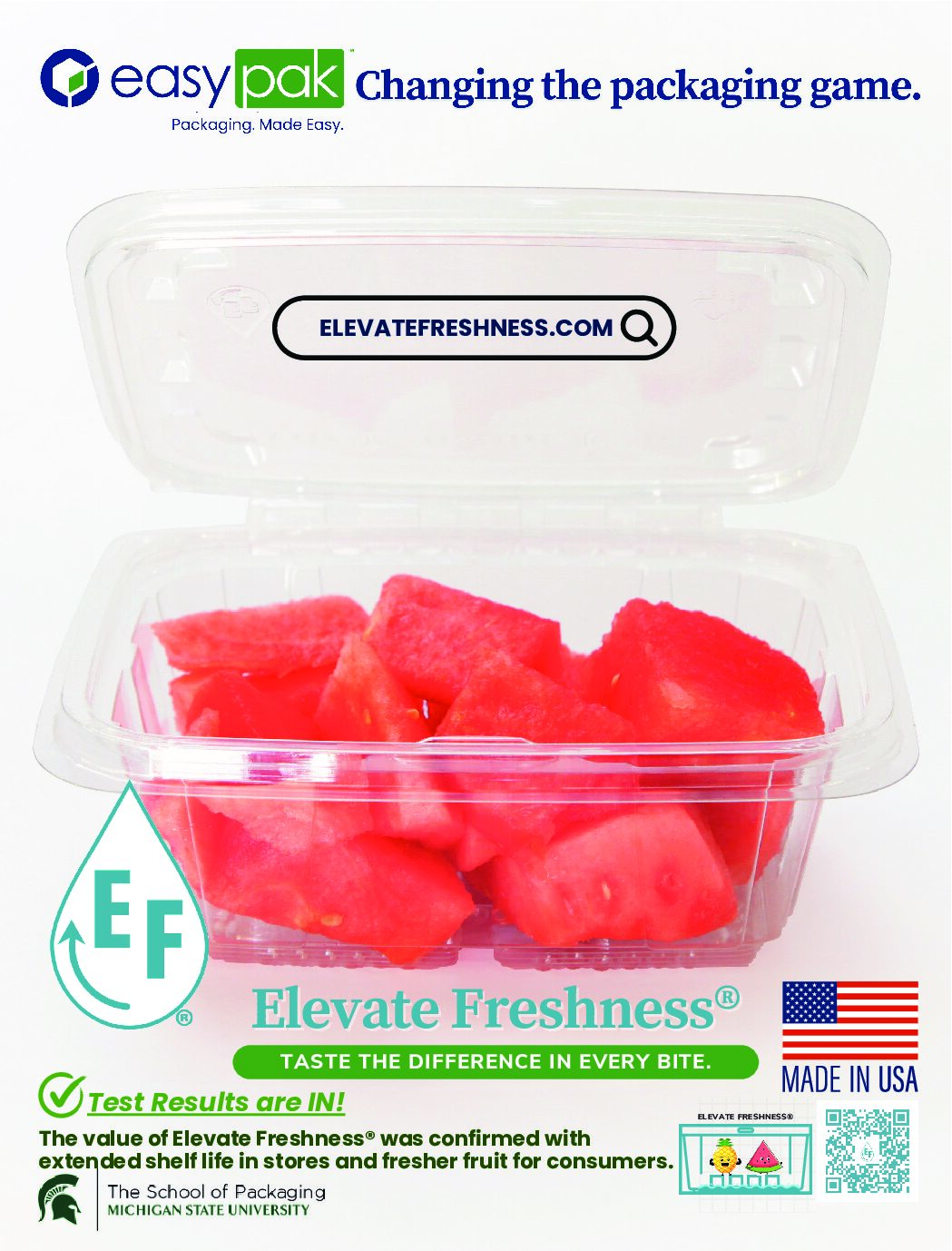
What trends are shaping Easypak’s 2026 strategy? Brian Smith, VP of Sales and Marketing and William Barrick, Senior Director of Product Management and Marketing, noted, “Today’s consumers are eating differently—and the packaging industry must catch up. More than 64 percent of consumers are actively seeking healthier snacks, and nearly 40 percent are replacing traditional meals with snacks each week. That shift has fundamentally changed how fresh food needs to be packaged, protected, and presented.”
They continued, “Easypak is intentionally designing packaging around how consumers actually eat today—more frequently, more flexibly, and with greater focus on health and freshness. To address the continued shift toward snacking and meal replacement, 40 percent of adults replace traditional meals with snacks weekly—Easypak offers a wide range of convenient, right-sized packaging formats designed for smaller, flexible eating occasions. As a result, consumers benefit from fresher food that lasts longer, while retailers benefit from improved product quality, reduced shrink, and stronger sell-through.”
The changing environment of the category has many wanting to lead the conversation, rather than follow.
“In 2026, Aluf Plastics aims to lead conversations around FDA-approved, sustainable packaging innovation, emphasizing transparency, food safety, and custom solutions that support evolving consumer health and snacking behaviors while helping brands meet regulatory and environmental expectations,” said Ballesteros of Aluf Plastics. “This includes our BioFlex trash bags, designed and tested to fully biodegrade in about four years in biologically active landfills, demonstrating our commitment to circular, environmentally responsible packaging solutions.”
“For too long, sustainability has been treated as a checklist item,” confided Smith and Barrick of Easypak. “In 2026, the industry must move beyond asking ‘Is it recyclable?’ and start asking ‘Does this actually work in a circular economy?’ Easypak is leading that shift through mono-material PET design and higher PCR content that simplifies recycling and supports emerging regulations. At the same time, we believe packaging suppliers must operate as strategic partners—helping retailers solve shrink, labor, merchandising, and supply-chain challenges, not just supplying containers.”
Richars of Anchor Packaging wants to talk about the power of packaging to do more for a business than just hold food. “It’s not simply a container. It’s a tool that allows efficiency and repeat customers. Our new Invertible single-piece containers are a great example of this. The base and lid are the same. This helps to control costs, simplify operations, cut storage space, and eliminate waste from base/lid mismatches. This is how innovation delivers value.”
Where are other companies focusing this year? Ballesteros shared, “Aluf Plastics’ top strategic focus in 2026 is advancing sustainable packaging solutions by reducing plastic in the waste stream through materials like Coex, compostable, and BioFlex bags, enabling brands to meet performance, regulatory, and environmental goals without compromising on quality.”
Easypak’s top focus is building high-performance packaging systems that deliver measurable value across the supply chain. “The company is prioritizing solutions that protect freshness, support operational efficiency, and align with long-term environmental expectations.”