Special Report: Seafood Merchandising
Companies at the forefront of the seafood space are each facing individual challenges to catch up to consumers’ health concerns, cooking limitations and how quickly comparable categories are developing. However, these challenges are spurring creativity as these brands take obstacles in stride and continue driving the seafood category forward.
“One of the biggest challenges in seafood merchandising is balancing complexity with simplicity,” said Mark Frisch, Executive Vice President of BSF (formerly Beaver Street Fisheries). “Seafood has more variables than most center-store proteins—seasonality, global sourcing, fluctuating costs, and varying consumer familiarity. Retailers want to innovate, but they also need programs that are operationally realistic for their teams. Bringing fresh thinking into the category requires simplifying the consumer decision process while strengthening retailer confidence. That means clearer value messaging, better storytelling around sourcing and sustainability, and merchandising strategies that make seafood feel approachable rather than intimidating. The retailers who succeed are those who remove friction from the purchase decision.”
“The key challenge in 2026 continues to be a volatile environment with highly fluctuating product costs and persisting tariffs,” said Andy Mecs, President of Chicken of the Sea. “Fortunately, shelf-stable seafood remains a budget-friendly lean protein that helps consumers to prepare quick and healthy meals and snacks. Consumers are increasingly engaging in healthy on-the-go eating occasions and specialized diets, such as GLP-1. With that in mind, Chicken of the Sea has teamed up with Frank’s RedHot to bring consumers a new mouthwatering flavor of wild-caught tuna in an on-the-go packet that is ideal for snacking, and offers a convenient way to add flavor and protein to lunchboxes or nutritious meals.”
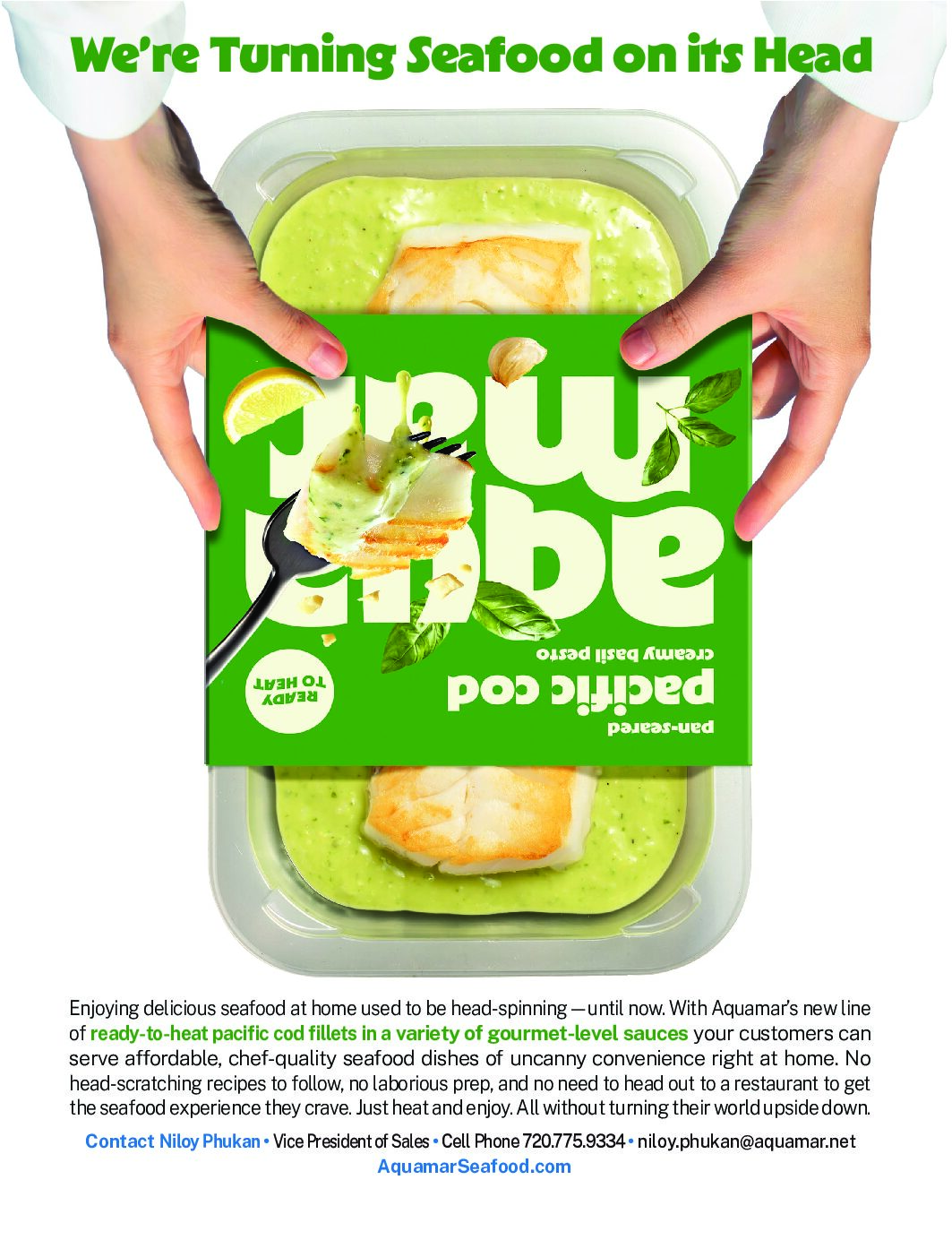
“The seafood industry has not evolved as quickly as other categories with how people live and cook today,” said Brian Bissell, CMO of Aquamar. “While most consumers want to eat more seafood, they lack the confidence and knowledge needed to prepare it at home. Those limitations have held back overall consumption and proposed solutions to date haven’t fully delivered due to inconvenient preparation methods, inconsistent quality, and limited inspiration compared to other protein categories. We must provide solutions that make seafood simple, approachable and delicious so consumers feel confident and excited to incorporate it seamlessly into their lifestyle. Products have to continue to taste great to be successful and pairing that with the convenience busy shoppers require will be the key to greater category growth.”
“In 2026, our top strategic focus is helping retail partners drive profitable growth through smarter sourcing and category optimization,” Frisch of BSF said. “That includes leveraging our global supply relationships to create stability in a market that remains dynamic, while also supporting retailers with data-informed product assortments and value-tier strategies. We are also focused on strengthening collaboration—aligning procurement, marketing, and merchandising efforts so that retailers can execute more cohesive seafood programs. The goal is not just supplying product, but helping partners build resilient, consumer-focused seafood departments.”
“Chicken of the Sea continues to focus on innovation and supporting our on-the-go tuna and salmon packet lineup to drive awareness of affordable, nutritious seafood options,” Mecs said.
“Our focus is continuing to encourage seafood consumption at home by providing convenient, nutritious and ready-to-eat products that inspire and simplify meal prep for the consumer while still delivering quality, flavor and value,” Aquamar’s Bissell said. “This begins with our surimi portfolio. We are incredibly proud of our surimi heritage, and we have exciting elements in store that will continue to propel its growth this year. In addition, we are also deliberately looking for opportunities to broaden our offerings to meet unmet consumer needs. That means fully cooked, accessible and affordable products, helping retailers meet the existing seafood demand that’s currently underserved.”
BSF has noted a shift in consumer preferences toward value-driven innovation, emphasizing affordability without compromising quality.
“We are seeing strong momentum around value-driven innovation,” Frisch said. “Consumers continue to prioritize affordability, but they are not necessarily willing to sacrifice quality. That creates opportunity for species diversification, secondary cuts, and alternative formats that offer strong price points without compromising the eating experience. Additionally, convenience remains a growth driver. Retail-ready packaging, portion-controlled options, and meal-solution positioning are gaining traction. The ‘next big thing’ may not be a single species, but rather smarter merchandising that blends value, ease of preparation, and global flavor profiles in a way that resonates with today’s shopper.”
Chicken of the Sea is revitalizing the seafood space by tapping into complementary categories that provide consumers with bold and tempting flavor profiles.
“I believe that ‘the next big thing’ is going to be a combination of convenience and sustainability,” Mecs said. “We can’t tell you what that is just yet, but I predict that there will be some innovation in this direction over the next year or two. We have already started this journey with exciting innovations focusing on convenience. With the launch of the Chicken of the Sea and McCormick partnership, including Frank’s RedHot and OLD BAY Seasoning, we hope to see even more innovation and category crossover. In addition, sustainability continues to be at the forefront of conversations here at Chicken of the Sea. We take that very seriously. Our globally recognized SeaChange 2030 platform has landed us at No. 1 on the Dow Jones Sustainability Index. Finally, all of our tuna and salmon items are fully traceable on our website, allowing the consumer to trace their product from ocean to plate.”