The Future of Seafood
While protein consumption is on the rise, seafood remains a unique category. Deli sushi is driving sales, and overall total US seafood dollar sales hit $24.2 billion. But interestingly, just 10 percent of shoppers account for 40 percent of all seafood purchases, according to Seafood Source.
Mark Frisch, Executive Vice President, BSF, shared his perspective that the biggest opportunity in seafood right now is supplier consolidation and simplification. “Seafood remains one of the most fragmented protein departments in retail, with category managers often managing dozens of vendors across overlapping categories and capabilities. At BSF, we move 32 commodities across whitefish, pelagic, farmed seafood, shellfish and cephalopods in both frozen and fresh formats at an $800 million scale. That breadth allows retailers to support a broader seafood assortment through fewer supplier relationships while maintaining category depth and operational consistency.”
He continued, “Beyond consolidation, there are three growth areas I’d point to. First, frozen value-added products like breaded, marinated and portioned seafood continue growing because they offer convenience, consistency and easier preparation for consumers. Second, the Lent window still drives one of the largest seasonal seafood purchasing periods of the year, yet many retailers outside heavily Catholic markets still underutilize it. Third, salmon continues to stand out as one of the strongest-performing categories in seafood. It represents nearly half of fresh seafood sales and remains one of the few species seeing both dollar and volume growth, which is why retailers leaning into salmon as a featured category are seeing results.”
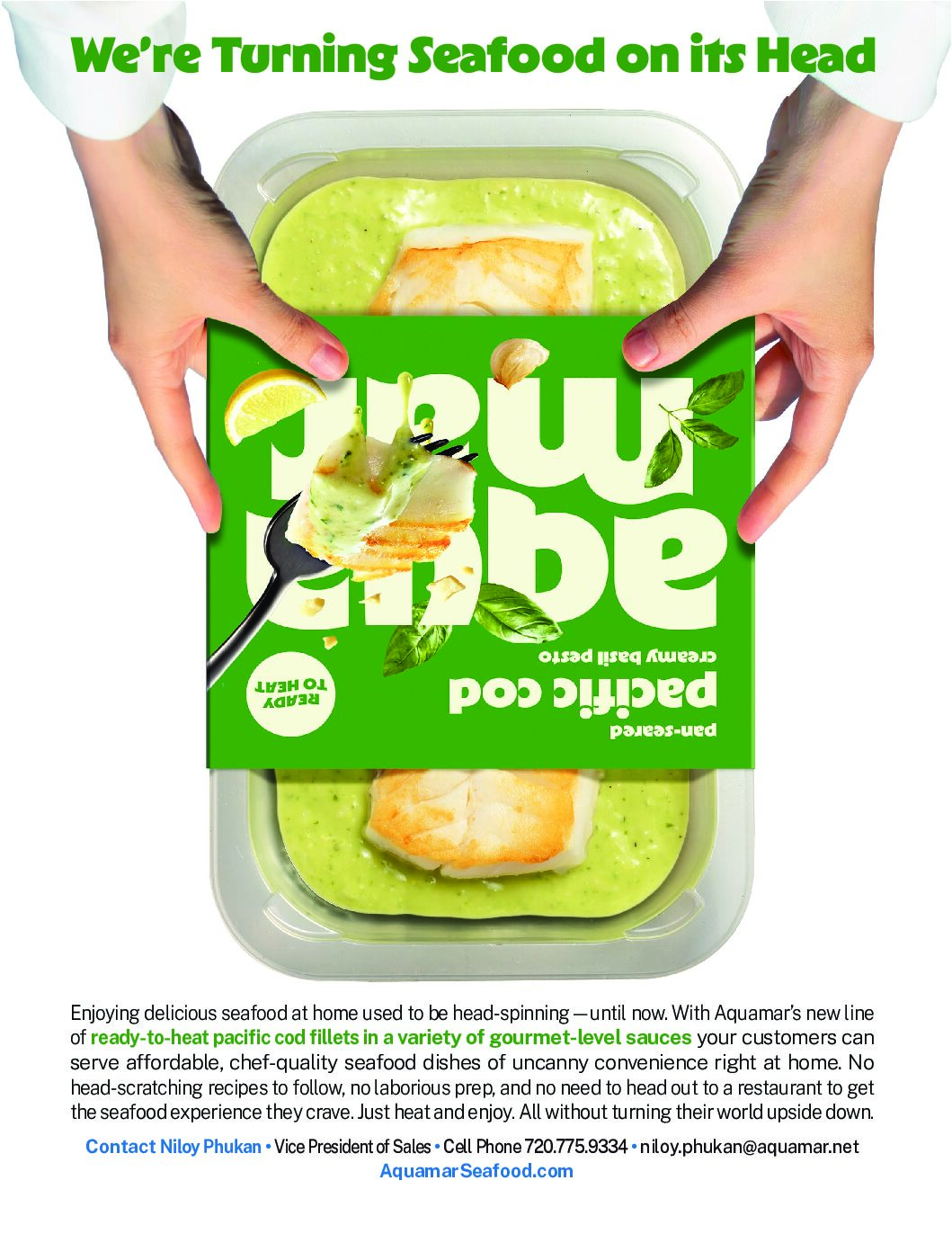
Brian Bissell, CMO of Aquamar, believes growth is about unlocking the consumption consumers already want. “People want to eat seafood more often, but the category has not consistently delivered products that are convenient, approachable, and craveable enough to fit modern life. Too many shoppers walk past the seafood department and choose other proteins because they feel intimidated, unsure how to prepare what they see, or simply do not have the time. Those are solvable problems.”
He continued, “Economically, consumers are increasingly looking for solutions that balance value, quality, and convenience. For some households, that means replacing restaurant occasions with easy, elevated meals at home. For others, it means finding more affordable ways to keep protein at the center of the plate. That is where products like surimi create real value. Surimi is a high-quality, low-fat, versatile protein that can substitute for virtually any perimeter protein while remaining highly cost-effective. Our surimi is made from wild-caught Alaska pollock, is fully cooked and ready to eat, and fits seamlessly into even the busiest family schedules.”
Frisch of BSF commented on how inflation has put significant pressure on the category. “December frozen and shelf-stable seafood prices were up more than 8 percent year over year, with shrimp and crab seeing some of the largest increases. The category remained resilient from a dollar-sales standpoint, but volume was impacted as consumers became more price-conscious.”
Frisch also named additional influences beyond the economy that may shape the next several years. “Frozen seafood is continuing to gain share in everyday consumer purchasing occasions. Improvements in freezing technology, product quality and convenience have strengthened consumer perception of frozen seafood, while retailers are also seeing benefits tied to reduced food waste and longer shelf life. Fresh seafood is expected to remain important for entertaining and premium occasions, but frozen products are becoming increasingly important in routine meal planning and weekly shopping behavior.”
He continued, “Health and nutrition are becoming even more central to seafood purchasing decisions. Growing clinical research surrounding cardiovascular, cognitive and overall wellness benefits associated with regular seafood consumption continues strengthening seafood’s position within the broader protein category. Digital engagement is becoming increasingly important within seafood retail. Industry research continues showing that frequent seafood purchasers are also among the most digitally engaged grocery shoppers.”
To inspire change in the category, Bissell of Aquamar added, “Different results require different actions, and that means innovation. We recently tested several innovation platforms with consumers and asked them to compare our concepts against the seafood products currently available in the market. Consistently, consumers perceived our innovation as both more convenient and of higher quality than existing options. That translated into strong purchase intent and high incrementality. For us, it reinforced a simple truth: convenient, great-tasting seafood has the potential to materially change category dynamics.”
Frisch of BSF believes everyone can help category growth. “Seafood consumption in the US still trails many other developed markets on a per-capita basis, which continues creating long-term growth opportunities for retailers, suppliers and foodservice operators focused on increasing consumer engagement and purchase frequency. Some of the most important conversations happening across the industry right now center on how retailers position frozen seafood within the broader category, the evolving balance between national brands and private label products, and how to reconnect with consumers who have reduced seafood purchases in recent years.”
Bissell of Aquamar believes the most important shift ahead for the category is moving seafood consumption from occasional to habitual. “The issue is not household penetration. Seafood already reaches 88.8 percent of households. The challenge is frequency. According to Power of Seafood data, 48 percent of Americans say they love seafood and another 31 percent say they like it. Yet despite USDA recommendations to consume seafood three or more times per week, more than 75 percent of households fall short. As health awareness continues to rise, the pressure to close that gap will only grow.”
The brands and retailers that make seafood easier to buy, prepare, and enjoy are the ones that can unlock the category’s next wave of growth.