The Future of Maple Syrup
A recent Golin survey analyzed more than 220 million households to learn who buys maple syrup and who doesn’t. They found that 56 percent of respondents kept some pure maple products in their homes. Whereas 18 percent keep only table syrup at home. This is good news for maple syrup farmers, as it suggests that consumers understand the difference between breakfast syrups.
Diving deeper into the data, Golin identified the unique purchase and lifestyle behavior of consumers who buy maple syrup. The demographics revealed a slight female predominance. This group is more likely to have professional, scientific, or technical careers and is more likely to own a home. As for shopping, they had high credit scores and shopped at retailers that included Costco and Whole Foods. They had environmentally-conscious shopping habits, which made them very open to organic and natural products.
Those who bought table syrup were more likely to be PTA and church members. They ate more fast food and had more health issues than the other categories. This group was much more price sensitive and was the most receptive to coupons.
Consumers who don’t buy any syrup fall between the ages of 25-34 and over 55. They were slightly more male, often single or divorced, with no children. They lived in more condos and apartments.
Brittany Bennet, Marketing Manager of Butternut Mountain Farms, shared more about consumer behavior and transparency.
“A recent report by the Specialty Food Association noted the emotional connection consumers are looking for in knowing who makes their food and visualizing how it’s processed. There’s an opportunity for further education at the shelf level on highlighting the hands-on effort required to make maple in addition to how to make the most of your maple syrup bottle and enhance the quality of the recipes consumers make.”
She continued, “Additionally, by looking into buyer behaviors, pure maple users are likely perimeter shoppers who choose local carrots, slow-fermented breads and local yogurt. There are many avenues for maple to be added to the cart with the intention of being used with these premium ingredients.”
Steve Anderson, President of Anderson’s Maple Syrup, shared a positive outlook for the additional use cases and the category.
He said, “There seems to be room for growth everywhere. More and more people are coming to pure maple syrup for their sweetener needs. Maple is no longer just for pancakes. Consumers use it in their smoothies, baking and grilling. While folks at home are using more and more maple in their everyday lives, so are major companies that are making anything from a sweet treat to a fancy pet food.”
He continued, “In the past, maple syrup has always been a comfort food when consumers are watching pennies. In the short term, I think pure maple syrup sales will remain stable and growth should follow in all categories as consumer confidence returns.”
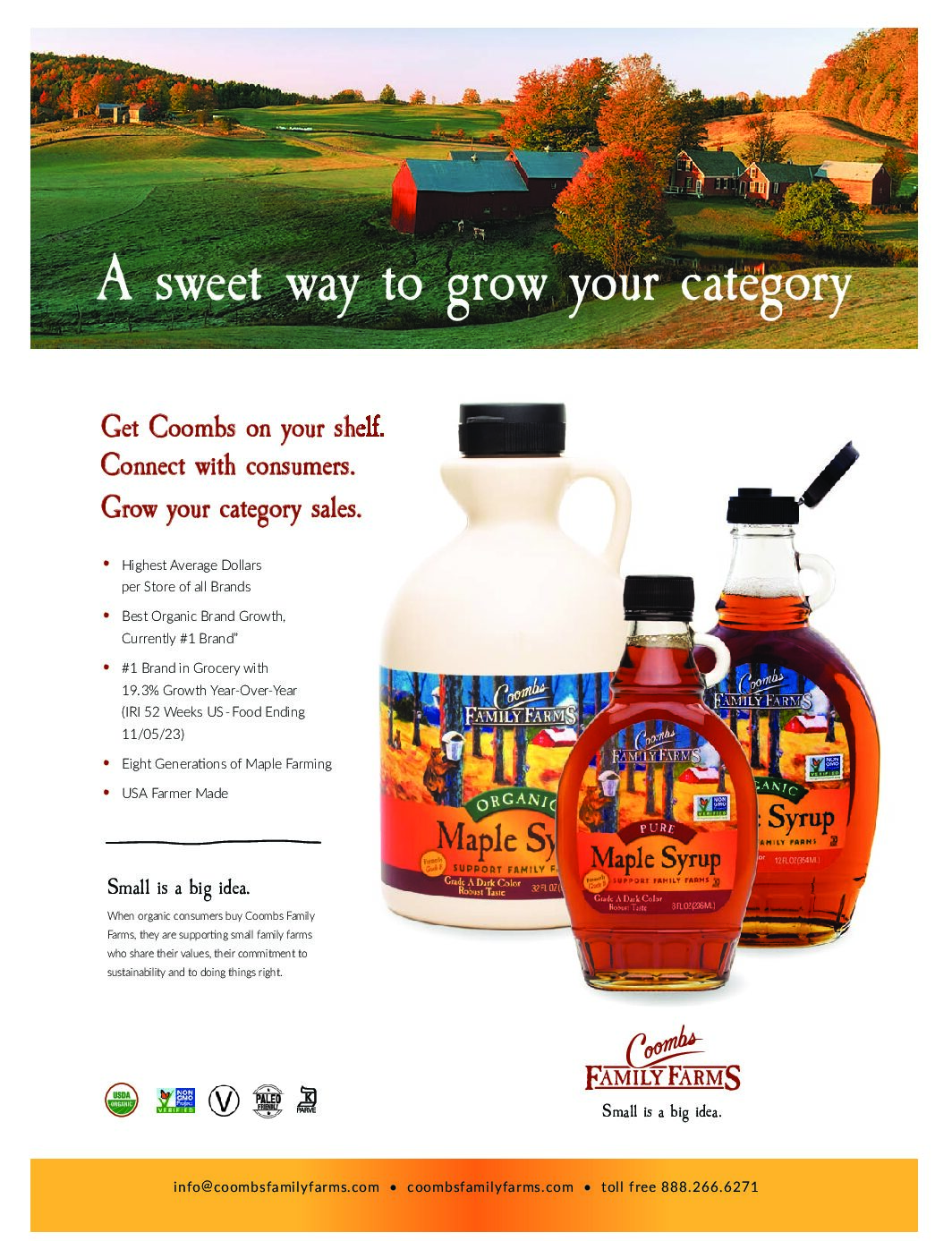
Arnold Coombs, Director of Sales and Marketing of Coombs Family Farms, affirmed, “Maple is being used more and more as an ingredient, and that’s where growth is coming from. It’s not just for pancakes. It’s for baking. It’s for barbecue sauces and marinades. And that’s where our marketing is heading.”
Look on Instagram for Coombs Family Farms and you’ll see recipe videos that showcase the many uses of maple syrup.
Coombs explained, “We are trying to appeal to the younger demographic with our social media. Younger consumers are living healthier lives and want healthier diets. They care about where things come from.”
The global maple syrup market is valued at approximately USD 1.75 billion in 2026 and is projected to reach more than USD 3 billion by 2034, according to Fortune Business Insights.
For Coombs Family Farms, working with retailers to help drive that growth is a key part of their business.
“We are evolving to be a better vendor to our clients and target promotions to move more product off the shelf for retailers. We look at regional data and don’t take a one-size-fits-all approach to our promotions. We are creative, dependable, and we want to promote and grow the category.”
Anderson of Anderson’s Maple Syrup commented, “Evolution normally means change. Well, our product is already as good as it can get, so the only changes that can happen are packaging and consumer awareness.”
The New York State Maple Producers indicated that 41 percent of US households use pure maple syrup often, with a significant portion utilizing it as an alternative to refined sugar in cooking.
Anderson of Anderson’s Maple Syrup affirmed, “More and more consumers are cooking and baking with maple syrup and maple sugar, and I expect that trend to continue to grow. Natural and great-tasting ingredients, unprocessed and not tampered with in any way. Just as Nature intended.”
Butternut Mountain Farms has been committed to the making, packing and distribution of high-quality pure maple syrup for more than 50 years.
Bennet declared, “We’re dedicated to supporting a community of sugarmakers in reaching markets and remain devoted to these core values of our company. As passionate maple syrup users, we know that maple is a year-round pantry staple. The rising demand for clean-label ingredients will see pure maple being welcomed into more homes.”
As maple evolves, the product itself stays the same—which is what customers and farmers appreciate.