
Category Analysis: Sour Candies
Sour candy brands are closing out the year with new products, seasonal activations and a sharper focus on evolving consumer tastes.
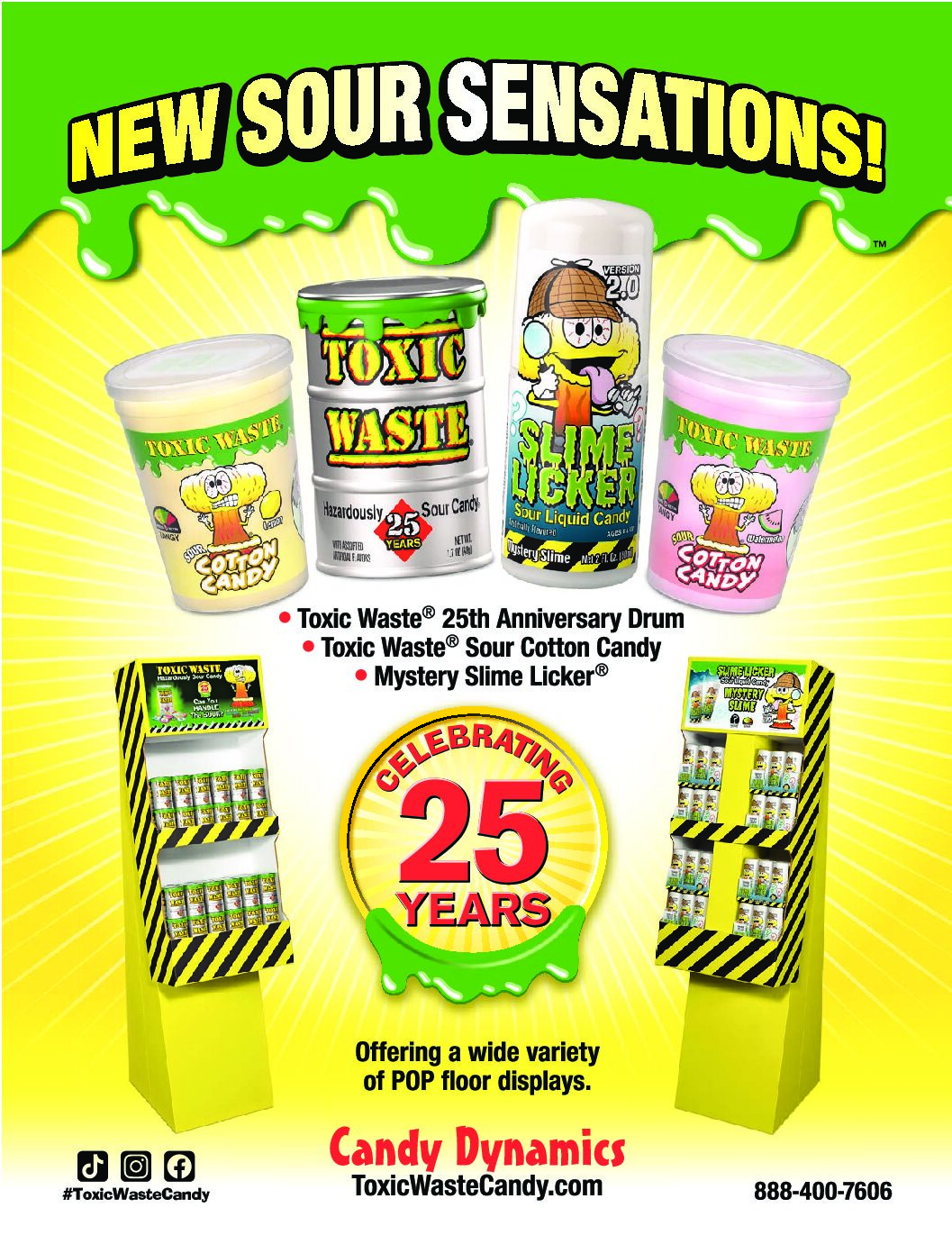
“The year as a whole has thrown curveballs our direction with changes to the economy and push for MAHA agendas among other things,” shared Haley Peyron, Senior Marketing Manager for Candy Dynamics. “Through the challenges, we continue to be resilient, especially heading into Q4, and look forward to seeing the holiday season through.”
Rounding out the year, Better Sour is launching its first-ever holiday shippers.
“We’ve never done something seasonal, and this is our first test to see how our globally-inspired, sour gummy candy can be part of holiday-themed retail activations and excitement,” revealed Isabella Hughes, Co-Founder & VP of New Business. “We think our gummies make a great stocking stuffer, and this could be the start of more holiday/seasonal moments for our emerging brand.”
“In terms of challenges, ensuring we continue to build out strong manufacturing partners to grow with us as our retail demand grows has been the biggest challenge of 2026. A lot of times we have wanted to say ‘yes,’ but had line time constraints. However, walking into 2027, we’ve never been better positioned to scale, and kudos to my co-founder Semira, who’s worked so hard to strengthen this over the last year,” Hughes continued.
“We are excited for the continued growth of our 28-year-old brand, one of the oldest all-sour candy brands in the country,” said Steve Schuster, President of Schuster Products. “The challenges we need to overcome are related to the fast and quick innovation by newcomers and their ability to gain distribution through social media. Ultimately, many of these competitors will fail when they learn and run into the minefields and the complexities of gaining distribution. Items can go viral, but virality does not remain steady, and sales declines can come quickly as other items go viral. This leads to shortened product life cycles. The other challenges are related to inflation, consumer pullback, and sluggish unit sales in the industry.”
“We continue to see the texture of sour candy playing a huge role in consumer interest and perceptions of a product,” Peyron noted. “No longer are consumers looking for something comfortable that mirrors a previous tasting experience. Instead, they seek out unique textures and consistencies, though they still search specifically for sour candy while doing so.”
Hughes of Better Sour is confident that consumers seeking refined, premium sour candy made with clean ingredients will continue to shape the category’s direction. “We think the more grown-up, upmarket, premium, foodie-forward customer is here to stay, one who is looking for not just natural, quality ingredients, but an elevated flavor experience when it comes to their sour candy purchases,” she offered. “Global flavors, adventurous flavors, and culinary-driven consumers who have exquisite taste are making their mark across all categories, but to date, most sour gummy candy has been just healthy remakes on classics or taken a more kiddie approach. We also think the interest in colors from plants/natural colors is here to stay, and presently, with the rise of GLP-1s, fiber and protein seem to be all the rage. Let’s see if the interest in fiber and/or protein making their way into candy has staying power, though!”
Sour candy manufacturers are receptive to retailers’ evolving expectations.
“Differentiating yourself in a crowded space is extremely important for retailers; there are so many entrants into the space,” Hughes remarked. “They also are focused on natural colors, and increasingly high fiber, lower sugar, rise in global flavors.”
“Generally speaking, they are really not looking for as much as they should be, but some are quick and dynamic, and seeking innovations in novelty, nostalgia, and trends such as the new product types,” observed Schuster. “Most of them fail to address building a complete sour section with notable sour brands that are families of sour, not extensions of sweet brands. The online stores, shops, etc., are picking up all this business with a focus on sour; if consumers don’t find it in the stores, they go online.”
“With the rise of challenge content, I think it is important to remember that there are not just extreme levels of sour, but rather a range of sour,” Peyron offered. “The Toxic Waste brand indicates this with a pucker meter on the packaging to signal the strength of the sour to the consumer, ensuring there is a sour selection for everyone—from the thrill seekers who may want that challenge to those just searching for a tangy treat.”
Hughes of Better Sour encourages companies to broaden their target audience. “It is for kids, and Gen Z/Gen Alpha,” she explained. “Just as there are sophisticated chocolates for the foodie-forward grown-up consumer, that same consumer is looking for an elevated sour candy experience and has greater spending power, usually stays longer and has a larger cart at checkout, so an important shopper for retailers.”
Schuster of Schuster Products agrees; brands should appeal to older shoppers. He added that sour candy has a place beyond novelty. Too often, sour candy is relegated to novelty, despite its potential to thrive in other segments.
“The single biggest misconception is that sour is only for kids or that it better falls into a novelty category,” said Schuster of Schuster Products. “The industry is confused about what a true novelty is. Novelties are not necessarily sour candy items, or regular gummy, chewy, or hard candy types. Novelties are historically value-added candy items that typically are toy/candy concepts that often offer an extra value or benefit. Sour is mainstream; it is not kid-focused. People in their 60s grew up with sour as the category came around in the late 80s, so people seek this taste in their daily palate. Brand extensions from sweet brands into sour often lead to cannibalization of the sweet brand.”
“Of course, there is always the pressure to keep up with trends in the market, especially with sour candy. The thing that will place the leaders above the rest of the category will be their understanding of how to make trends work for them while remaining true to the brand,” Peyron with Candy Dynamics said.
Certain qualities can help category leaders stand out. Hughes of Better Sour says companies must learn to pursue trends without losing sight of their identity and what makes them unique.
“Those who can speak to trends without betting /designing the whole business around them,” she said. “Leaders are ultimately creating brands and products that are iconic and enduring – and most of all, this is the food industry, so they must be craveable and drive loyal, repeat purchases!”
Schuster of Schuster Products said exceptional leaders take the time to understand and focus on their audience and know when to act nimbly.
“Paying attention to the consumer and determining exactly what they are interested in, or migrating to,” he said. “The sour market is now a widening age demographic in which segments within it are seeking different types of products, different levels of sour, and different textures and flavor combinations. Face Twisters now has items that address all of these sectors.”