
First Take: Bison
An American-sourced protein option at heart, the bison category has faced some challenges last year with shrinking supply due to drought and trade issues. However, 2026 is expected to see growth driven by rising consumer demand for healthy, sustainable meat alternatives. According to online data sources, the bison meat market is projected to expand, with a compound annual growth rate (CAGR) of around 7.5 percent
“I love the idea of bison because it’s such an American product. I think of it as beef with less fat in it,” said Bobby Flay, a celebrity chef, previously in an interview. Bison’s leaner nutritional profile compared to beef has made it a popular alternative for health-conscious consumers.
In a recent article, National Bison Association executive director Jim Matheson said the latest US Department of Agriculture numbers show young bulls are averaging US $5.01 per pound hanging weight. “That’s the highest bull price we’ve seen in about a decade on the rail, so prices are very good for producers right now,” he said. “Of course, this is all related to the supply shortage we’re currently experiencing. By and large, this is due to too much consumer demand for our product, which is a great problem to have.”
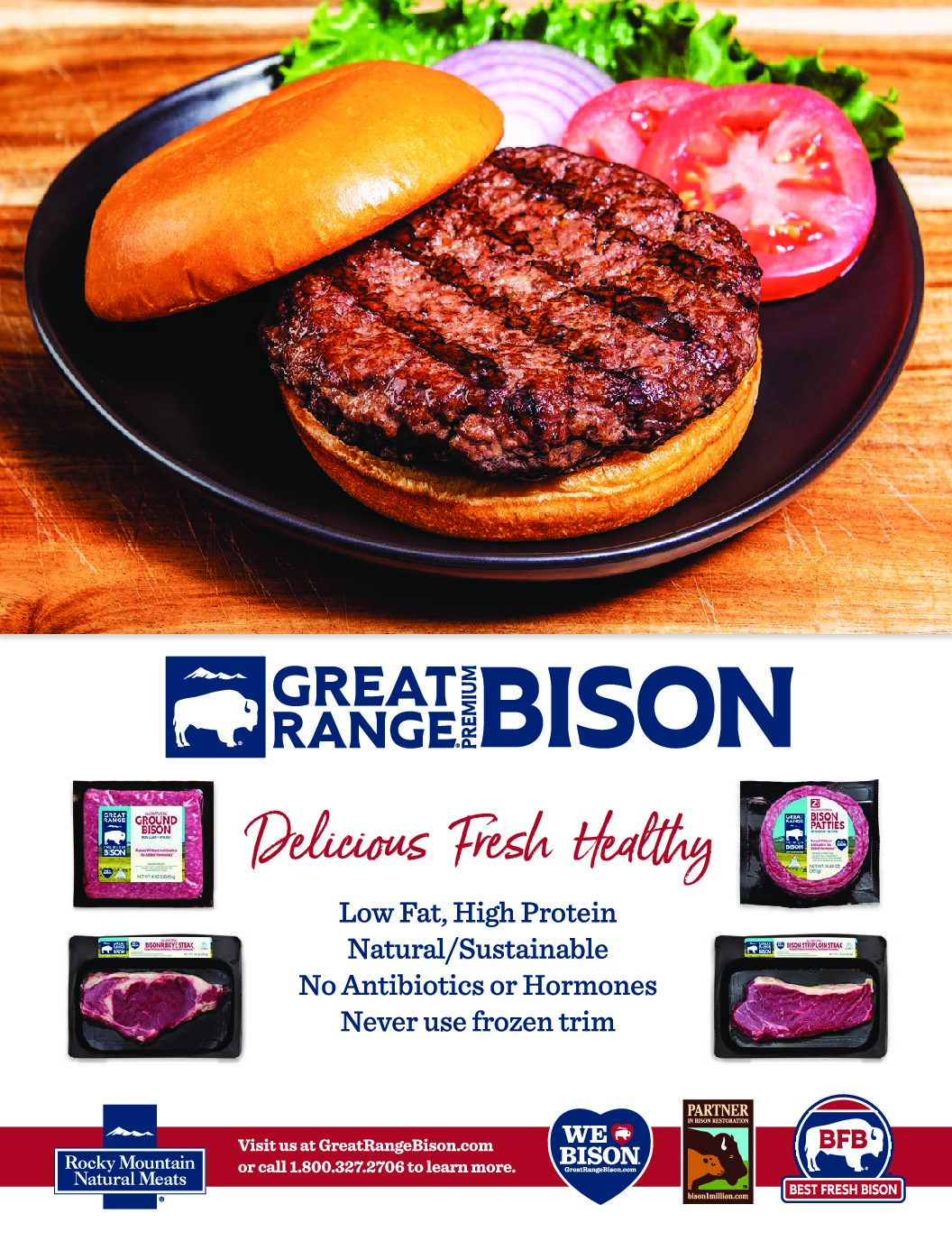
That’s welcome news for companies like Great Range Bison, a ranch in North America that’s been raising bison for the past 30 years without the use of antibiotics or growth hormones. They work closely with ranchers and producers to ensure their bison are raised sustainably.
In today’s marketplace, where many products change hands multiple times before they reach the consumer, Great Range is proud that it offers bison direct from family-owned ranches with few steps in between. The short distance between the herd and the consumer helps guarantee the authenticity and honesty of their products.
Great Range Bison is an example of a company aligning well with the consumer preference for sustainability and ethical sourcing. This has led to more demand for organic, grass-fed, and humanely raised bison. Bison are considered “ecosystem engineers” whose grazing practices are believed to cause less environmental damage than typical cattle farming.
NorthFork Bison has been mainstreaming bison meat for more than 25 years. They are one of Canada’s largest specialty and wild game meat companies with wild game products like elk, venison, ostrich and boar. In media reports, Rocco Verelli, founder of Northfork Bison, shared, “We’re one of the biggest players in the space in Canada. What differentiates us is that we control everything from A to Z. We have contracts with farmers who deliver the animals to slaughterhouses, we do our own processing, and our trucks go all the way to Washington, D.C.” He also reported that, “The No. 1 challenge is cost,” he said. “Bison are not given hormones and steroids, so it takes longer for them to grow to market size. Bison will never be the same cost as beef. Being a family man who knows consumers, I know that’s a problem when people see beef burgers for two or three times less money next to a bison burger.”
The National Bison Association met for its 2026 Winter Conference and Gold Trophy Show and Sale, which serves as a key gathering for stakeholders to discuss the future of the industry. Local outlets reported, “Bison producers from across Canada are gathering in Regina this weekend for their national convention, show and sale, under the theme Creating Our Future.” Executive Director Scott Yule said the event reflects the optimism and ambition within the bison sector. “For many people, the bison’s story is well known—once numbering in the millions, their population dwindled, but commercial production has steadily grown since the 1980s and ’90s,” Yule said. “Now, as our industry continues to evolve, we’re looking ahead. Where do we go next? How do we keep growing?”
Public and private initiatives are actively working to restore bison populations across North America. In Colorado, a new law effective January 2026 will classify free-ranging bison as both “livestock” and “wildlife,” allowing for management amid restoration efforts.
For companies like High Plains Bison, that means a dedication to high standards. Their bison are never, ever given growth hormones, antibiotics, steroids, or animal by-products. They meet strict, nationally recognized animal welfare standards. All High Plains Bison products are 100% Certified Bison—a quality seal that ensures production with strict ranching, animal welfare, food safety and processing standards.
What can other bison companies expect for 2026? Consumers’ health focus will continue. With protein trending in many consumer food categories, bison is well-positioned as a healthier alternative to traditional beef—it’s low in calories and fat, but high in protein and nutrients. As with other categories, consumers want convenience with cooking. It will be critical for bison companies to diversify with ready-to-cook and processed bison products to fit busy lifestyles.
The North American bison meat market is projected to grow significantly, driven by shifting consumer preferences and expanding supply chains. Many farms are practicing sustainable ranching practices as well as investing in innovative technologies like traceability solutions and direct-to-consumer platforms to meet demand while maintaining the unique, non-domesticated nature of the animal.
The outlook for the bison category is one of optimism and growth, with a focus on sustainable expansion to capitalize on strong consumer interest.