
First Take: Frozen Seafood
Traditionally, frozen seafood has outpaced other animal protein categories within the frozen aisles. Dollar sales of frozen seafood increased by 2.8 percent compared to last year’s performance and reached $8.4 billion in total, while unit sales rose by 0.5 percent, based off figures compiled by Circana. In spite of unit sales of frozen seafood experiencing a flat-to-down trajectory throughout 2025, frozen seafood is growing. This growth is particularly true within premium and ultra-premium brands, in addition to private label, according to figures compiled by 210 Analytics.
Frozen seafood companies like Trident have been keeping the category lively and top of mind with product launches that reflect shoppers’ interest in variety, flavors, easy preparation and healthier protein choices. Trident recently launched a Snack Bite under the Crab Joy by Louis Kemp brand.
“It’s proving to be very popular,” Mike Elam, VP—Retail Sales for Trident Seafoods, said in a previous interview. “Consumers are looking for convenience with on-trend grab-and-go protein options, and the snack bite is performing well.”
Aquamar’s surimi products, including its Surimi Snack, Surimi Stick, Surimi Flake, Shred and Chunk, have been standout performers, said CEO Daryl Gormley.
“By addressing multiple consumer needs simultaneously, Aquamar surimi delivers on a great tasting product, while removing the complexity that often keeps families from including seafood in their meals,” Gormley said in an earlier interview. “Beyond convenience, the versatility of surimi has been a major driver of success. Consumers love that they can easily incorporate our products into salads, pasta dishes, stir-fries, wraps, and countless other family favorites.”
North Coast Seafoods, a leading supplier of sustainably sourced seafood, introduced its Seaweed Kelp Balls in Sysco’s Cutting Edge Solutions Program. As one of the industry’s largest food distributors, Sysco curates the annual Cutting Edge Solutions Program to highlight innovative products designed to elevate menus, alleviate kitchen stress and streamline operations. North Coast Seafoods’ Seaweed Kelp Balls are a game-changing addition to Sysco’s 2025 Cutting Edge Solutions lineup, shifting seaweed from condiments, sauces, and side dishes to the center of the plate as a high-quality, healthy plant-based protein option. “The wow factor lies in the incredible story of kelp—a truly game-changing ingredient that delivers a win from every perspective. The kelp meatball is delicious, but the story behind kelp makes it unforgettable,” Andrew Wilkinson, Chief Director of R&D and innovator of the product, said in a press release. “This product is disrupting the plant-based category by harnessing this renewable vegetable from the sea. Kelp is one of the only ingredients on the planet that doesn’t take from the environment—it actively restores it. By helping to rebuild and preserve the ocean, combating climate change, promoting health, and supporting local coastal communities, kelp embodies sustainability at its finest.”
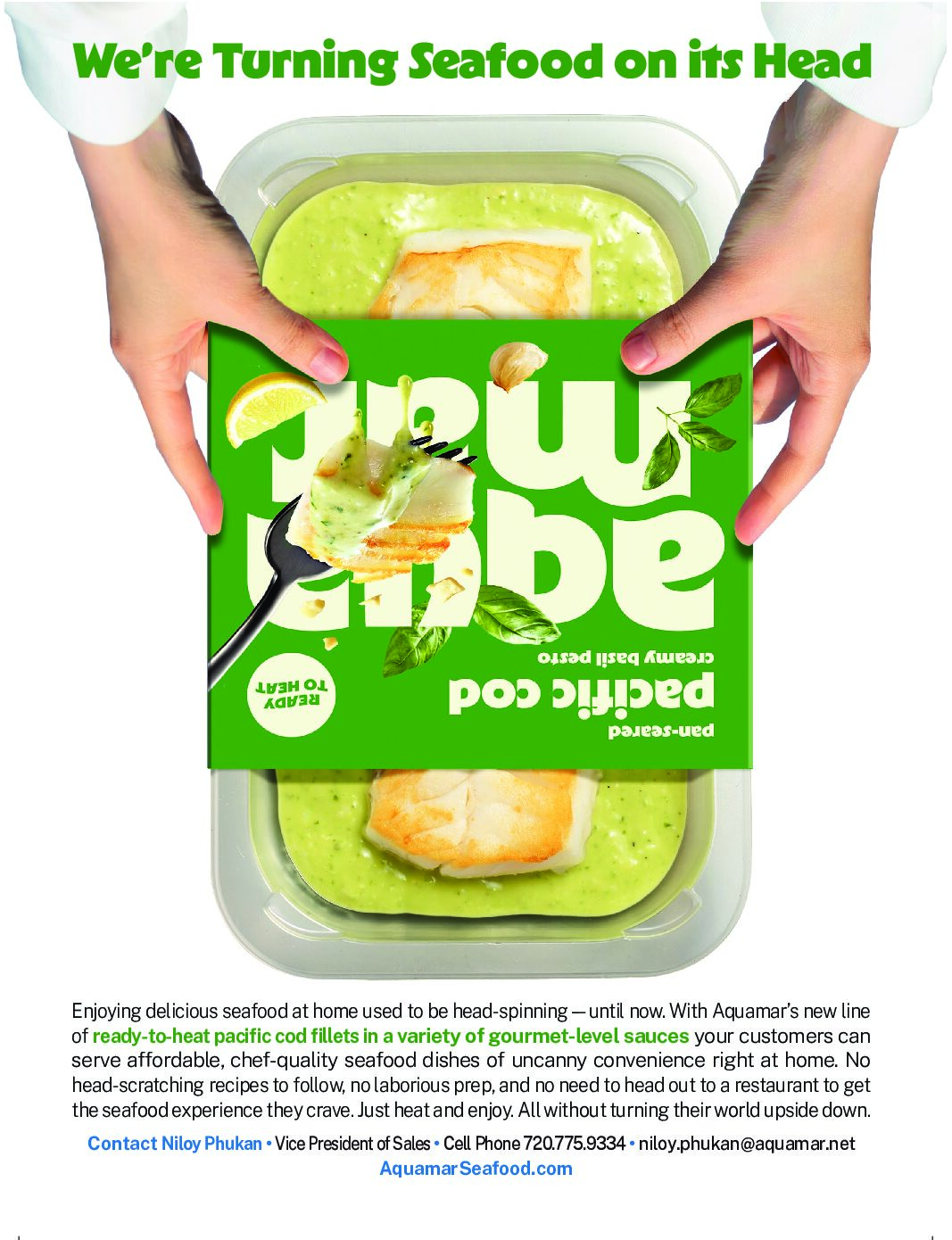
Lately, Aquamar has been encouraged by the rebound in demand for surimi and the broader seafood segment. “The seafood category is seeing recovery from the drag on demand as a consumer response to post-Covid inflation,” Gormley said. “Important to the category is seafood convenience innovation to help consumers honor their interest in eating more seafood at home. Despite the industry tropes, consumers know seafood is healthy, delicious, and sustainable. Consumers are also aware of seafood, with seafood finding its way into 80 percent of US households each month. And, seafood is affordable versus other proteins, meaningfully cheaper than beef and within the cost of a cup of Starbucks coffee for households to feed their families seafood in lieu of pork or chicken each day. The real unlock to consumption is helping consumers with preparation at home.”
Frozen seafood companies are attracting attention within the category by taking a mindful and conscientious approach to sourcing fish and the process each manufacturer takes to ensure a fresh, safe product.
“We set ourselves apart by being the go-to brand for raw material that is wild caught in Alaska,” Elam with Trident Seafoods said. “Our vertical integration means that we ensure quality and sustainability at every step of the process, from fleet to fork.”
“While much of the seafood industry has remained focused on fishing, Aquamar has positioned itself as an innovation leader by prioritizing consumer convenience and accessibility,” Gormley said. “Our product strategy centers on solving real consumer pain points rather than simply offering more of the same. We’ve invested in developing formats and flavors that bridge the gap between consumers’ desire to eat more seafood and their confidence in preparing it at home. This means creating products that don’t just taste good, but that busy families can easily incorporate into weeknight dinners.”
From premium innovation to plant-based disruption, frozen seafood’s momentum reflects a broader shift toward smarter, more accessible choices. Companies that simplify preparation while telling a compelling sourcing story are setting the pace for where the category goes next.