
First Take: Greeting Cards
The greeting cards industry is far from being written off.
The category is substantial, with US shoppers buying 6.5 billion greeting cards per year, with roughly 1.5 billion purchases being Christmas-themed cards and Mother’s Day cards coming in a close second, according to the Greeting Card Association (GCA). The industry’s two largest companies, Hallmark and American Greetings, represent 80 percent of the greeting card industry, an industry that has a retail dollar size of $7 billion, according to the GCA’s numbers. The remaining 20 percent is represented by smaller independent greeting card makers.
Companies are gaining momentum and building on this newfound excitement surrounding greeting cards and appreciation for receiving a handwritten note in the mail.
“One of the most important trends shaping the greeting cards category is the renewed demand for authentic, tactile, and emotionally meaningful connections,” said Steven Gimbelman, CEO of Designer Greetings. “While digital communication continues to dominate everyday interactions, consumers are increasingly turning to physical cards for moments that truly matter. Greeting cards are no longer viewed as disposable—they’re keepsakes that carry emotional weight and personal intention. Beyond sentiment, added value is increasingly defined by the physical experience of the card itself. Consumers are responding to thoughtful attachments and treatments—special envelopes, dimensional elements, tactile finishes, and small, unexpected details that elevate the moment of exchange. These enhancements transform a card from a simple message into a more complete gift experience, reinforcing its role as a keepsake rather than a commodity.”
He continued, “When executed with intention and at accessible price points, attachments and treatments strengthen emotional impact, justify trade-up, and deepen the recipient’s sense of connection. At the same time, personalization and inclusivity are becoming essential, not optional. Shoppers want to see themselves, their relationships, and their life moments reflected on the card rack. Leaders who succeed this year will be those who invest in diverse messaging, premium textures, thoughtful design, and niche occasions, while still delivering value across multiple price tiers.”
In December, Minted released its artist-designed greeting cards in select Whole Foods Market stores across the grocer’s footprint of more than 520 locations across the US.
Considered the greeting card brand most preferred by Millennials and Gen Z consumers, Minted has disrupted a category that was once feared to go the way of newspapers. According to the GCA, shoppers between the ages of 35 to 60 peruse the broader greeting card industry compared to the bulk of Minted’s following, which is represented by 19-to-38-year-old shoppers. With its greeting cards retailing between $5.99 to $8.49, Minted’s core consumer is an upscale Millennial or Gen Z female with the means to move towards higher economic and social status. These younger, ambitious females are proving to be the target demographic retailers are attracting to the greeting card aisle.
“Our mission has always been to connect consumers with exceptional design and the independent artists who create it,” said Melissa Kim, Co-Founder and CEO of Minted. “Whole Foods Market shares our commitment to quality, creativity, and community. We’re bringing modern greeting cards to stores, speaking directly to younger generations.”
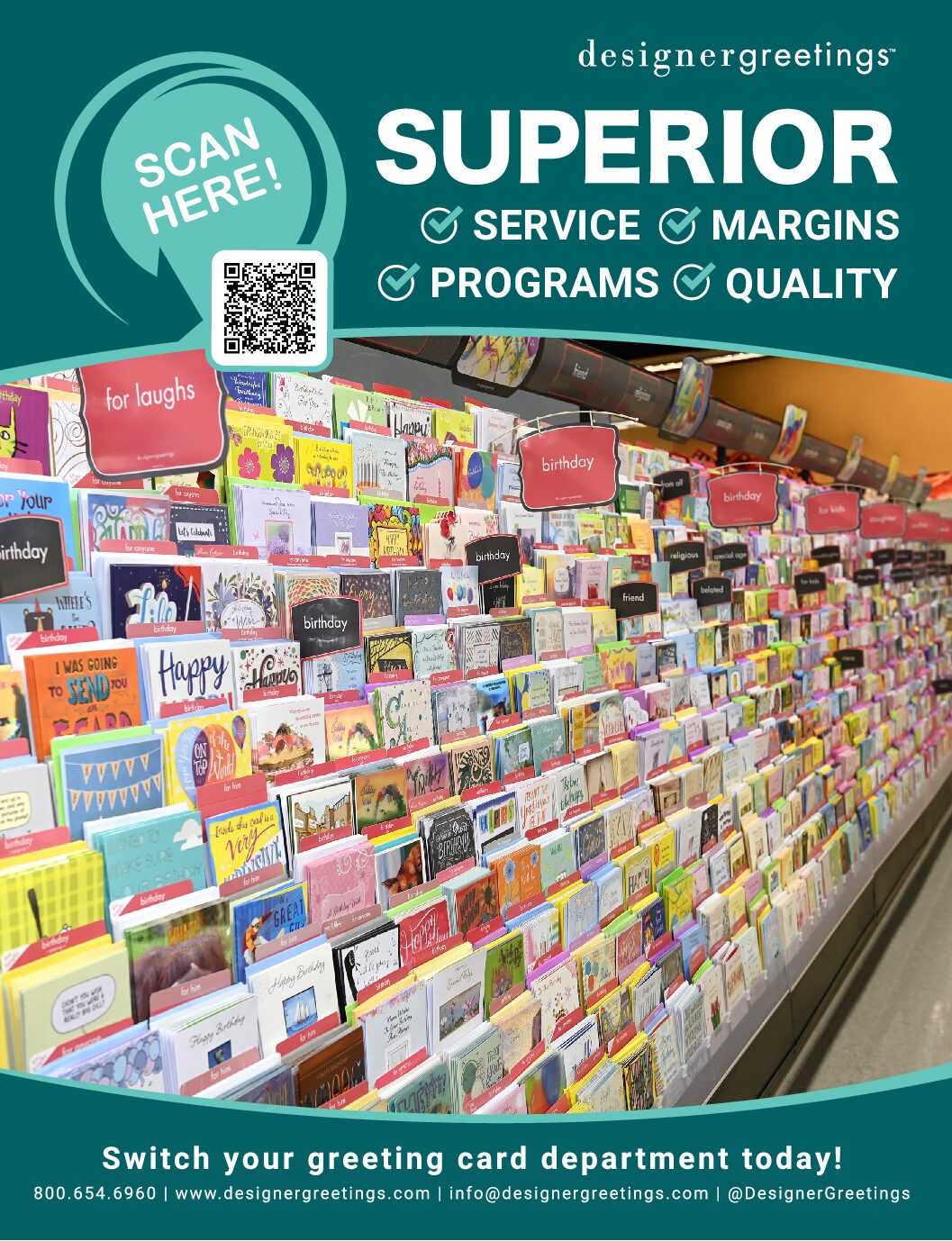
Gimbelman noted that Designer Greetings’ top strategic focus in 2026 is delivering best-in-class service execution for grocery retailers.
“With more than 1,100 dedicated service merchandisers, mobile phone–based tools, and frequent, repeat in-store visits, Designer Greetings ensures planogram integrity, timely replenishment, and real-time responsiveness at the shelf,” he explained. “This approach supports consistent execution, accurate inventory levels, and dependable in-store support across grocery locations.”
Even as technology progresses at breakneck speeds, some traditions have remained untouched.
“Birthday cards continue to be a strong performer, reflecting the everyday nature of how people connect,” Amy McAnarney, VP and General Manager, Strategic Accounts and Business Development, previously said. “Their success speaks to the enduring importance of celebrating personal milestones and Hallmark’s ability to offer designs and messages that resonate across generations and relationships. As people seek more meaningful ways to show up for one another, we’re proud to provide products that make those moments feel personal and heartfelt.”
Greeting cards give consumers a voice when they have trouble finding the right words to convey to friends and family that they care. And that connection, while changing, is still something to put a stamp on.