Category Analysis: Onions
Despite the fickle weather of this past winter, many online media sources report that the 2026 onion outlook is favorable. This is good news as consumers increasingly demand organic and pesticide-free onions, driven by health consciousness. There is also more demand for specialty onion varieties, such as shallots and sweet onions, due to the rise in home cooking as restaurant prices increase.
Now, a few months into 2026, onion farms are preparing for the upcoming season. Kelsey Weingart, Brand Manager, Marketing of Peri & Sons Farms, shared, “Sustainability in packaging has been a major focus heading into 2026, and not just because of incoming regulations. It’s the right direction, and honestly, one we were already moving toward.”
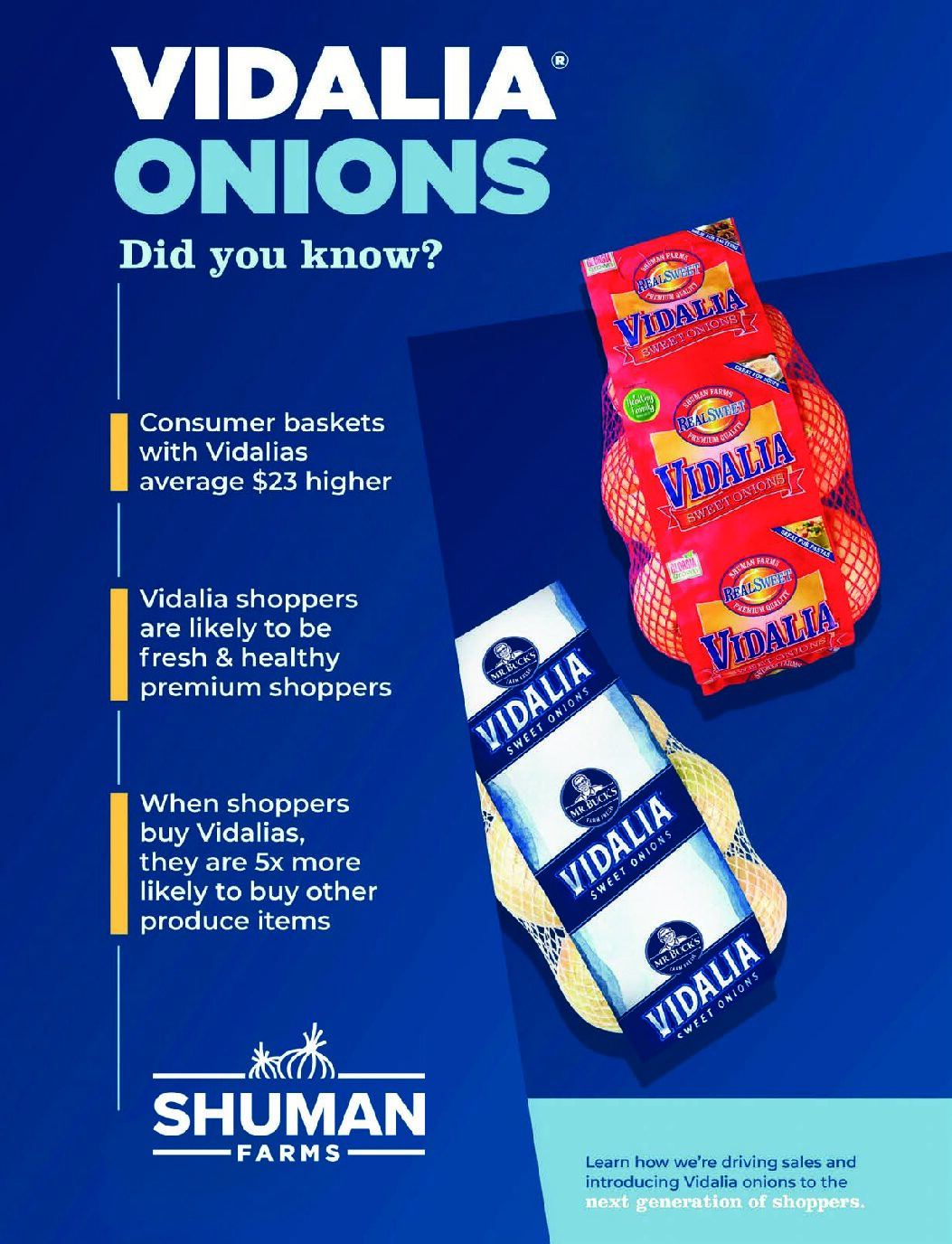
Farms are also turning their attention to regional specialties. Shuman Farms is looking forward to shipping its Georgia-grown sweet red onions from May through July. “The Rubies brand launched in 2021 and has been a success at retail, providing strong incremental sales opportunities for Shuman’s retail partners,” said John Shuman, President and CEO of Shuman Farms. “Grown in the same sandy soils that lend Vidalia onions their iconic sweetness, Rubies can be described as ‘the red onion without regret,’ providing a depth of sweet and savory flavor to burgers, salads, and more without the lingering aftertaste of a conventional red onion.”
In an earlier interview, Troy Bland, CEO of Bland Farms, emphasized that the most important trend in the onions category this year centers on consumers’ focus on quality, transparency and availability. He said, “Shoppers are increasingly seeking produce that tastes great, and they feel confident in purchasing—from how it was grown to how and when it can be enjoyed.” This trend shows up in a few key ways: premium eating experience, supply reliability and consumer transparency. Bland explained, “Buyers are willing to pay more for onions with consistent flavor, texture and shelf life—whether that’s sweet onions for grilling or all-purpose varieties for everyday cooking. Retailers and foodservice partners now expect steady, year-round supply models that reduce seasonal gaps. This means sourcing from diversified growing regions and investing in logistics solutions that keep quality high throughout the supply chain. And labels and storytelling that communicate growing practices, origin, and freshness are resonating more than ever.”
The global fresh onion market is expected to grow, with some reports citing a 3.2 percent CAGR from 2025 to 2033, reaching a value of $61.6 billion by 2033.
As Peri & Sons Farms transitions to spring onions, Weingart relayed, “Spring onions look different: they have more surface imperfections and thinner skin, and buyers sometimes see this as a quality issue. But it’s actually the opposite. That’s what fresh looks like. A stored onion has had months to cure and develop a polished exterior. A fresh spring onion hasn’t. We’re working hard to educate both buyers and consumers on what to look for.”
Supply chain pressures and increasing freight costs are putting pressure on farms to deliver efficiently.
Weingart of Peri & Sons Farms noted, “We’re navigating rising costs of packaging, transportation, and operating expenses, all while retailers are pushing to bring costs down. It’s a real balancing act. What we won’t do is compromise on quality or flavor to make the numbers work.”
A big challenge for Shuman Farms isn’t cost; it’s an aging target audience. Shuman explained, “One of the biggest threats to the Vidalia industry today is an aging core consumer base. In response, targeting younger generations is top of mind in Shuman Farms’ marketing strategy this Vidalia season.” The farm has been focusing on social media content, as well as hosting “Vidalia Night” at both the University of Georgia and Georgia Southern University baseball games to increase awareness of Vidalia onions.
2026 remains a year focused on sustainability thanks to the increased practice of regenerative agriculture. The first certified regeneratively grown onions will hit the market this year from Wiskerke onions.
For Peri & Sons Farms, sustainability isn’t a department or an initiative. Weingart explained, “It lives in the decisions our farming teams make in the field, the choices in packaging, and the way we think about our relationships with the land we farm. One example we’re proud of is our Earthbag, a 100 percent plastic-free bag that is both compostable and recyclable. It’s the kind of solution that reflects how we think about sustainability across the board.”
She continued, “We’ve also made significant investments to reduce water use on the farm, cut emissions, and lower our consumption of gas and oil. And it goes further than that. We recycle across every corner of the operation, from pallets to machine parts to technology.”
With a favorable outlook and strong seasonal momentum, 2026 is shaping up to be a solid year for onions.