Category Analysis: Sweet Potatoes
High in vitamin A and potassium, sweet potatoes are a nutrient-dense and affordable food. They recently went viral on TikTok when a teacher made a baked sweet potato with melted Butterkäse cheese. Even now, Butterkäse cheese remains popular, frequently selling out at many stores.
For the 2026 season, Japanese and purple varieties are trending as more consumers embrace plant-based diets. According to online media sources, the sweet potato market is expected to reach a value of $59.97 billion by 2030.
Sloan Lott, Director of Sales at Bland Farms, shared how growth is impacting their brand, Sand Candy Produce. Sand Candy Produce was formed when Bland Farms partnered with Battleboro Produce, Boyette Brothers Produce, and Sandyland Produce to create a “one-stop shop” for sweet potatoes and Vidalia onions.
Lott reported previously, “Bulk sweet potatoes continue to be our top seller at Sand Candy, but we’re seeing strong growth in consumer bags, which are quickly gaining ground. With increased demand for sweet potatoes across the board—driven by their versatility, nutritional value, and year-round appeal—shoppers are buying more at a time, and they’re looking for options that fit their lifestyle. The rise in bag sales reflects a more consumer-driven market, where convenience and value play a big role in purchase decisions.”
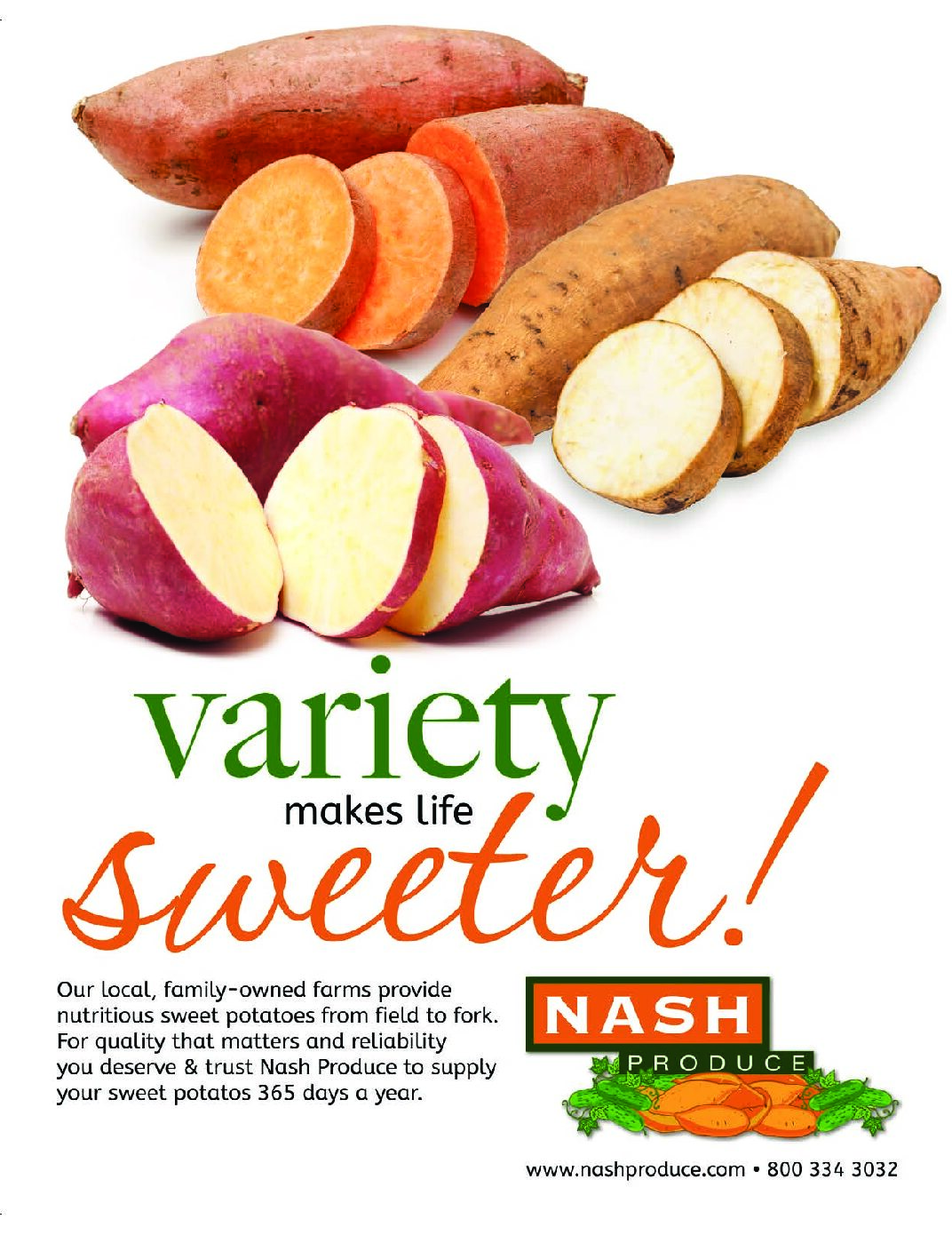
David Bradley is the Director of Business Development at Nash Produce, a North Carolina-based packer and shipper focused on sweet potatoes. Bradley commented earlier on consumer trends, “Our value-added items, the bags and tray packs, they’ve been a hit. You start looking around from the consumer’s standpoint, and the hot trend of the moment is convenience—so being able to have a convenient, value-added product for them has definitely helped us out. We provide tray packs, bags and microwavable sweet potatoes.”
North Carolina remains a top US producer for sweet potatoes, and the North Carolina Sweet Potato Commission works hard to support that lead. The North Carolina Sweet Potato Commission is a nonprofit corporation made up of more than 400 sweet potato growers, along with the packers, processors and business associates that support them. The sole purpose of the commission is to increase sweet potato consumption through education, promotional activities, research and honorable horticultural practices among its producers.
Bradley of Nash Produce is grateful for their support and education on the health benefits of sweet potatoes. He noted, “The North Carolina Sweet Potato Commission does a great job of working with dieticians to help promote that information to consumers. In turn, retailers see that as more consumers come in and buy more sweet potatoes. From a consumer standpoint, we don’t market to the consumer; that’s more of the commission. From our perspective, with the retailers, we try to show them the benefits of sweet potatoes.”
Considered one of the most nutrient-rich vegetables for the price, consumers are choosing more sweet potatoes during this tough economy. Lott of Sand Candy Produce elaborated, “Sweet potatoes continue to gain traction because they’re nutrient-dense, versatile, and affordable. In many households, they’re taking the place of regular potatoes or even grains, thanks to their fiber, vitamin A, and complex carbohydrates.”
He continued, “We’re leaning into that shift by positioning sweet potatoes as an everyday essential—not a specialty item. According to the USDA, per capita consumption of sweet potatoes has increased by more than 40 percent over the past two decades, and we’re seeing that reflected in growing demand across retail and foodservice.”
Sand Candy Produce is meeting increased demand in a number of ways. Lott explained, “By focusing on consistent supply, convenient pack sizes, and retailer-driven promotions, Sand Candy is helping meet that demand while expanding our footprint. In today’s market, shoppers want value—but they also want food that supports their health. Sweet potatoes check every box.”
Nash Produce stands out from its competitors by driving more consumers to reach for its potatoes. Bradley replied, “What has helped us to stand out is quality and customer service. We do what we say we’re going to do. That means a lot. Customers can count on us, and we’ll do anything they want to create value for them. One size doesn’t always fit all; we uniquely tailor our service to each and every customer, and we do that to help separate us from our competitors.”
Both companies are positioned to meet modern retailer demands while delivering consistent quality and supply. Where will they lead the category next? Lott replied, “By merging generational farming expertise with a sharp understanding of retail dynamics, Sand Candy brings a fresh perspective to the sweet potato category. The team’s approach includes crop diversification, regional sourcing, tailored pack sizes, and data-driven promotional strategies—all designed to meet the evolving needs of today’s consumer. Every decision reflects a commitment to quality and consistency, supported by insights earned over time and sharpened by forward-thinking execution.”